A straight answer from someone who’s seen it all
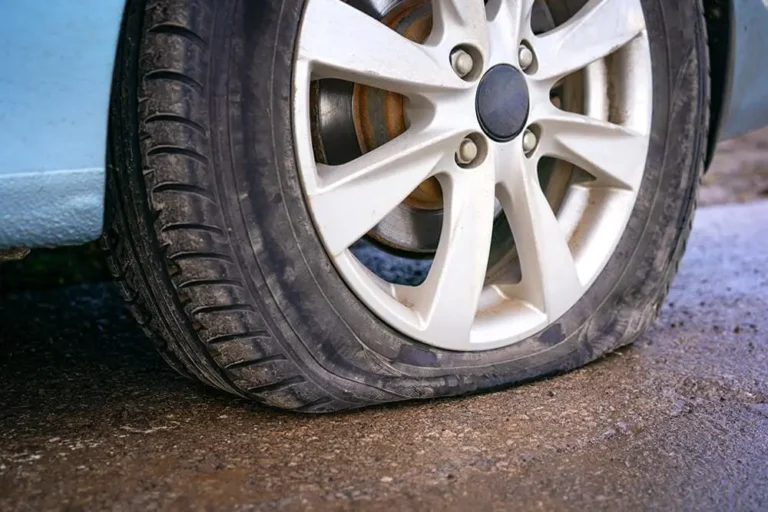
Right, let’s cut through the confusion. You’ve got a puncture. Maybe you noticed it this morning, maybe a warning light came on, maybe your car’s been feeling a bit… wobbly. Either way, you want to know: can it be fixed, or are you looking at a new tyre?
Good news – A lot of punctures can be repaired. Bad news… Not all of them. Here’s how to tell the difference.
First things first: where’s the damage?
This is the big one. The location of the puncture matters more than anything else.
If the nail, screw, or whatever bit of road debris caused the damage is sitting in the central three-quarters of the tread (what the industry calls the “repairable zone”), you’re likely in luck. That’s a textbook repair job.
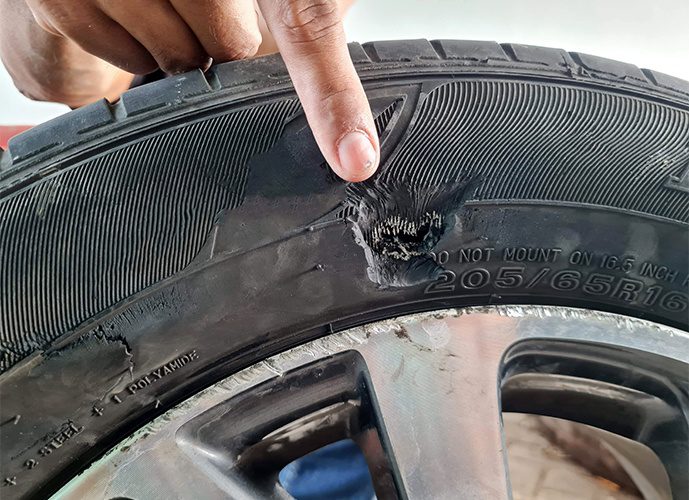
If the damage is on the sidewall, the shoulder (that curved bit between the tread and the side), or near the tyre’s edge, that’s a different story. Those areas flex constantly as you drive. A repair there won’t hold, and more importantly, it isn’t safe. That tyre needs replacing — no debate, no workarounds.
Size matters (this time, at least)
Even if the puncture is in the right place, the size of the hole makes a difference. As a general rule, if the object that caused the damage is more than 6mm in diameter, a repair isn’t going to cut it. That’s roughly the width of a pencil – anything bigger than that and the structural integrity of the tyre is too compromised.
Most nails and screws? Fine. A big bolt or a chunk of metal? Probably not.
What about run-flat tyres?
Run-flats are a bit of a special case. They’re designed to be driven on after a puncture (usually up to 50 miles at reduced speed) but that doesn’t mean they bounce back afterwards. Once a run-flat has been driven on flat (or even significantly underinflated), the internal structure is often damaged in ways you can’t see from the outside. Most manufacturers say don’t repair them. We’d agree.
The repair process — what actually happens
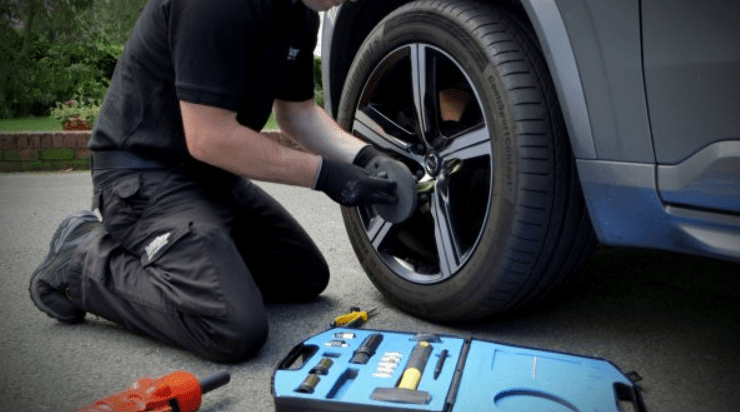
If your tyre is repairable, here’s what a proper job looks like. The tyre comes off the wheel entirely. The inside gets inspected — because what matters isn’t just the hole you can see, but whether there’s any internal damage. Then it’s a plug-and-patch repair from the inside. That’s the only repair method that meets British Standard BS AU 159. If someone offers to just stick a plug in from the outside without removing the tyre, politely decline. That’s a temporary bodge, not a repair.
When you definitely need a replacement
To make it simple, you’re looking at a new tyre if:
- The puncture is on the sidewall or shoulder
- The hole is bigger than 6mm
- There are multiple punctures close together
- The tyre has been driven on while flat
- There’s cracking, bulging, or visible damage beyond the puncture itself
- The tread depth is already close to or at the legal minimum of 1.6mm (why repair a tyre that needs replacing anyway?)
What should you do right now?
Don’t drive on it if you can avoid it — driving on a flat or severely underinflated tyre damages the sidewall quickly and can take a repairable situation and make it unrepairable.
Get it looked at. A proper inspection takes minutes and takes the guesswork out of it entirely.
At Rubber Lou Tyres, we’ll tell you honestly whether your tyre can be saved or whether it needs replacing — and we won’t try to sell you a new one when a repair will do the job perfectly well. That’s just not how we operate.
Book a tyre repair or replacement with us now!
Got a puncture you’re not sure about? Bring it in or give us a call. Lou’s seen worse.